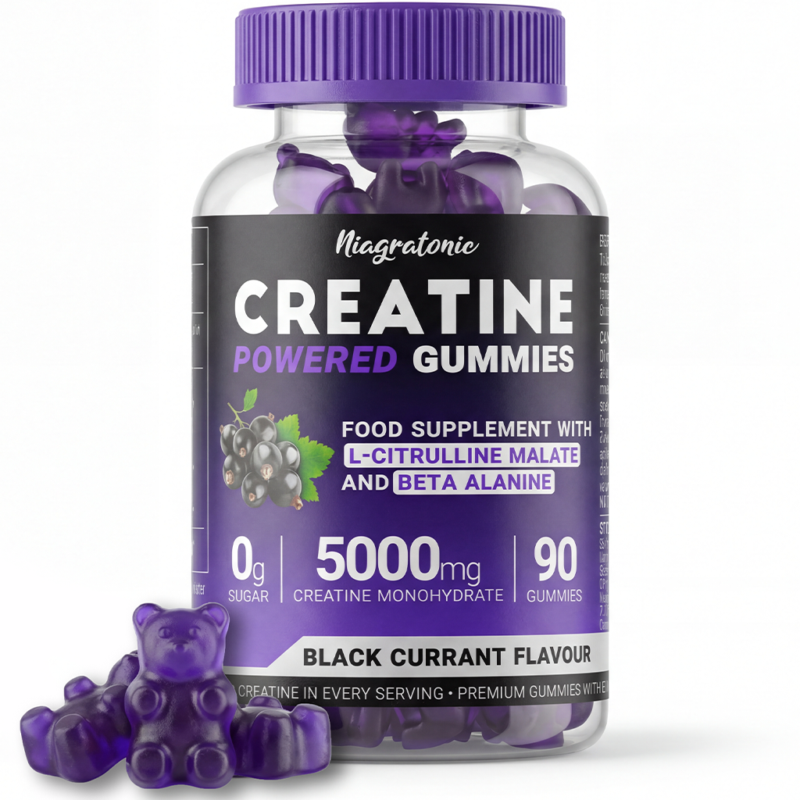
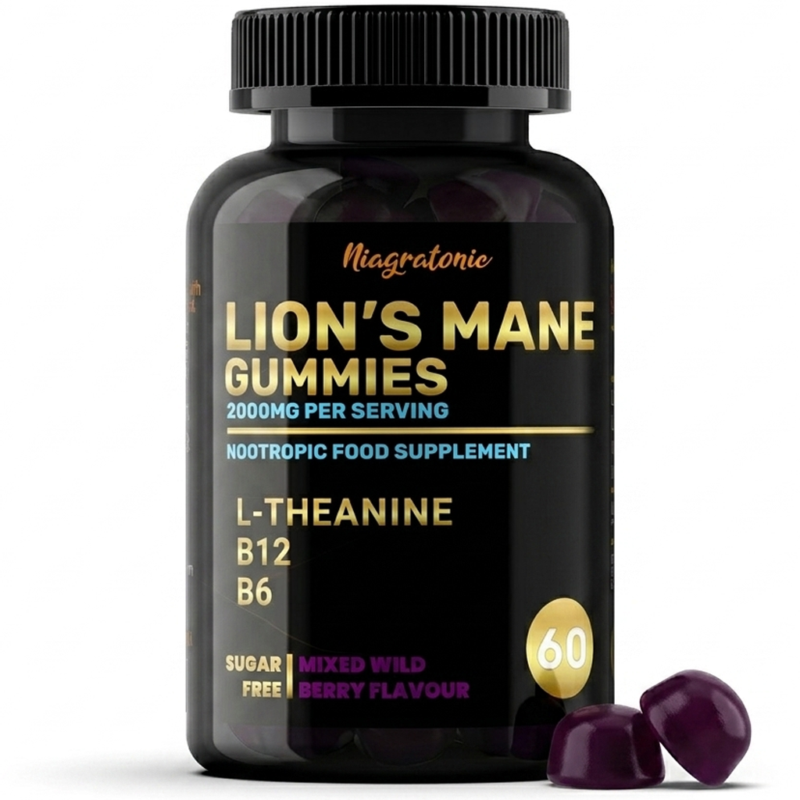


Yes, most healthy adults can take lion’s mane and creatine together. These supplements work through different mechanisms and there is currently no evidence suggesting that combining them is harmful for healthy individuals. In fact, many people use lion’s mane for focus and cognitive support while taking creatine for physical performance, recovery, and brain energy metabolism, making them a potentially complementary combination

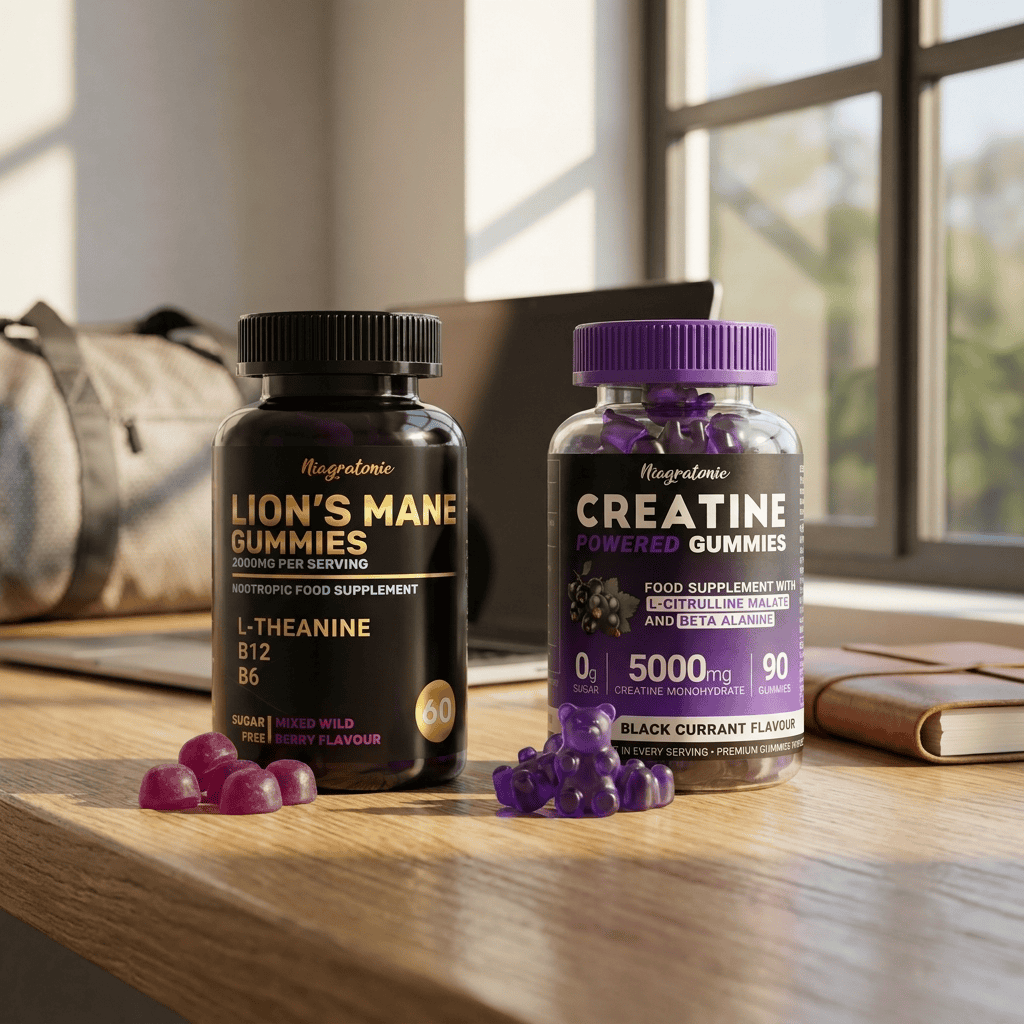
✓ Lion’s mane and creatine serve different purposes and can generally be taken together.
✓ Creatine supports muscular performance and may also benefit brain energy production.
✓ Lion’s mane is commonly used to support focus, concentration, and cognitive wellbeing.
✓ There is no established requirement to separate doses throughout the day.
✓ Consistency matters more than precise timing for most users.
Quick Comparison
| Feature | Lion's Mane | Creatine |
|---|---|---|
| Main Use | Cognitive support | Physical performance and recovery |
| Popular Users | Students, professionals, gamers | Athletes, gym-goers, active adults |
| Typical Daily Amount | 500–2,000mg extract | 3–5g creatine monohydrate |
| Works Immediately? | Usually no | Usually no |
| Requires Daily Use? | Yes | Yes |
| Often Taken With | Coffee, nootropics | Protein, pre-workout, hydration |
Lion’s mane is a functional mushroom traditionally used in East Asian wellness practices. Modern supplements typically use concentrated extracts from the mushroom fruiting body and are often marketed for focus, mental clarity, productivity, and cognitive support.
If you’re still deciding whether functional mushrooms are worth adding to your routine, you may also find our article on Are Mushroom Supplements Worth It? What You Need to Know helpful.
Creatine is a naturally occurring compound found in muscle tissue. Supplementing with creatine helps increase phosphocreatine stores, supporting high-intensity exercise, strength performance, recovery, and potentially certain aspects of brain energy metabolism.
For most healthy adults, yes.
There are no known direct interactions between lion’s mane and creatine that would require them to be separated or cycled differently.
One reason the combination has become increasingly popular is that it targets two different areas of performance:
New to creatine? Our complete guide to Creatine for Beginners: What to Know Before Your First Time Taking Creatine covers everything from dosage and timing to common misconceptions.
Many people who work demanding jobs, study intensively, run businesses, train regularly, or participate in competitive sports choose both supplements because they address different aspects of performance.
Rather than competing with each other, they tend to fit into the same daily routine.
The Modern Performance Stack
Ten years ago, supplements were often split into categories:
Today, many people are looking for products that support overall performance rather than a single outcome.
Many people also combine lion’s mane with other cognitive support ingredients. If you’re primarily interested in mental performance rather than physical performance, our guide to Best Productivity Stack: Lion’s Mane + L-Theanine explores another popular combination.
Someone training at the gym may also need:
This is where the lion’s mane and creatine combination becomes attractive.
Potential Complementary Benefits
| Goal | Lion's Mane | Creatine |
|---|---|---|
| Focus | ✓ | Possible |
| Productivity | ✓ | Possible |
| Strength | Limited | ✓ |
| Power Output | Limited | ✓ |
| Recovery | Limited | ✓ |
| Cognitive Support | ✓ | Emerging Research |
| Active Lifestyle Support | ✓ | ✓ |
Importantly, they achieve these effects through different mechanisms, which is why many supplement users view them as complementary rather than overlapping.

Lion’s mane and creatine may be worth considering if you want support for both mental and physical performance within a single daily routine.
The combination is particularly popular among:
When choosing products, prioritise transparent ingredients, appropriate dosages, and reputable brands over flashy marketing claims.
For lion’s mane, look for clearly labelled mushroom extracts.
For creatine, creatine monohydrate remains the benchmark ingredient due to its extensive research base.
Most importantly, remember that supplements work best alongside the fundamentals:
Those factors will always have a greater impact than any supplement stack alone.
Lion’s Mane Research
Research into lion’s mane has grown substantially in recent years.
Scientists are particularly interested in compounds called:
These compounds are being investigated for their potential effects on nerve growth factor (NGF) and brain health.
While results are promising, current research remains relatively limited compared with established supplements such as creatine.
Several human studies have reported potential benefits for cognitive function and mental wellbeing, although larger and longer-term studies are still needed before firm conclusions can be drawn.
This means lion’s mane should be viewed as a potentially useful wellness supplement rather than a guaranteed cognitive enhancer.
Creatine Research
Creatine is one of the most studied sports nutrition supplements available.
A 2024 systematic review also found that creatine may support certain aspects of cognitive function, including memory and attention, which has contributed to growing interest in combining it with cognitive-support supplements such as lion’s mane.
Research has consistently demonstrated benefits for:
In recent years, researchers have also explored creatine’s role in brain energy metabolism, cognitive function under stress, and mental performance.
Although this area is still developing, it has increased interest in combining creatine with cognitive-support supplements such as lion’s mane.
People who balance:
often report the greatest interest in combining the two supplements.
A typical example could be:
In these situations, physical and mental performance both matter.
StudentsUniversity students increasingly experiment with supplement routines aimed at supporting:
While supplements are never a substitute for sleep, nutrition, and effective study habits, lion’s mane and creatine are both commonly included in student wellness routines.
Gamers and Esports EnthusiastsCompetitive gaming requires:
Some gamers use lion’s mane alongside creatine as part of a broader performance-focused routine.
Gym-Goers Seeking More Than MuscleMany gym users today are interested in:
Take them whenever you are most likely to remain consistent.
For most people:
works perfectly well.
Example Daily Schedule| Time | Supplement |
|---|---|
| Breakfast | Lion's Mane |
| Breakfast or Post-Workout | Creatine |
| Lunch | Optional second lion's mane serving |
| Evening | Usually unnecessary |
Morning Stack
Many users choose:
as a simple morning routine.
This approach is convenient and helps establish daily consistency.
Around Workouts
If your main goal is athletic performance:
If you’re unsure how much creatine to take each day, our How Much Creatine Per Day? UK Dosage Guide explains the most commonly recommended amounts.
Lion’s mane does not need to be timed around workouts.

| Your Goal | Lion's Mane | Creatine | Take Both? |
|---|---|---|---|
| Build Strength | Optional | Recommended | Possibly |
| Improve Focus | Recommended | Optional | Possibly |
| Improve Productivity | Recommended | Optional | Possibly |
| Support Training & Mental Performance | Recommended | Recommended | Yes |
| General Wellness | Optional | Optional | Personal Choice |
| Competitive Sport + Desk Job | Recommended | Recommended | Often Useful |
| Pros | Cons |
|---|---|
| Targets both physical and mental performance | Requires purchasing two supplements |
| Easy to add to a daily routine | Benefits are not immediate |
| Generally well tolerated | Lion's Mane research is still developing |
| Creatine has strong scientific support | Some users may prefer simpler routines |
| Suitable for active lifestyles | Consistency is required |
While individual experiences vary, several themes appear consistently across reviews, community discussions, and user reports.
Commonly Reported BenefitsUsers often describe:
Interestingly, many users report that the biggest benefit is not a dramatic change in performance.
Instead, they describe small improvements that accumulate over weeks of consistent use.
Common ComplaintsNot every user reports noticeable benefits.
The most common criticisms include:
Some users also report digestive discomfort when first starting creatine, although this is often resolved through appropriate dosing and adequate hydration.
The Consistency FactorOne of the strongest themes among long-term users is consistency.
People who use both supplements daily for several weeks tend to report better outcomes than those who use them sporadically.
This aligns with how both supplements are intended to work.
Neither is typically considered a quick-fix product.Not all supplements are created equal.
When comparing products, focus on quality indicators rather than marketing claims.
For Lion’s Mane
Look for:
Avoid products that hide ingredient amounts behind proprietary blends.
For a deeper comparison of mushroom supplement formats and ingredients, see our guide to Best Mushroom Gummies for Focus, Energy and Immunity.
For Creatine
Look for:
Creatine monohydrate remains the form supported by the largest body of research.
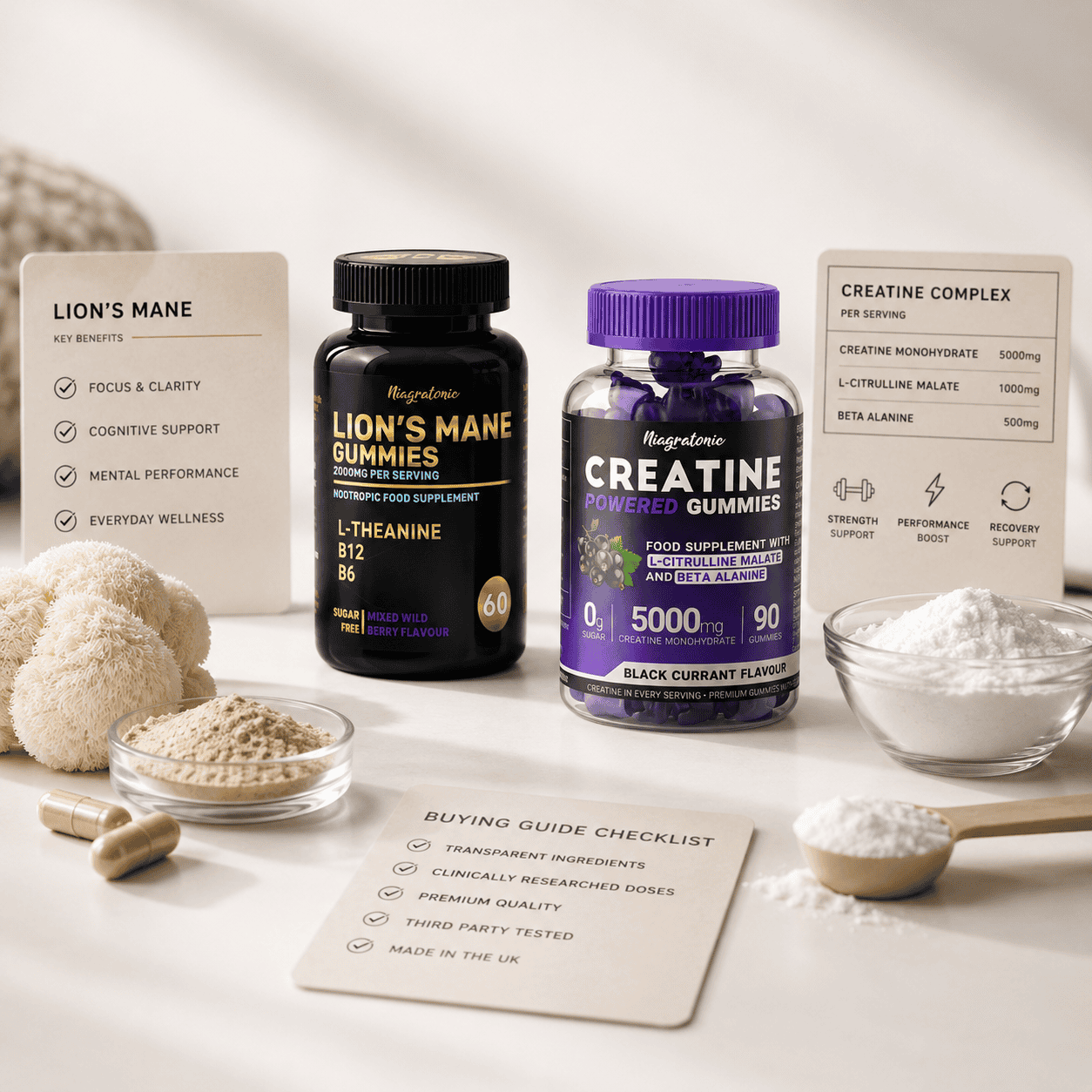
Lion’s mane and creatine may be worth considering if you want support for both mental and physical performance within a single daily routine.
The combination is particularly popular among:
When choosing products, prioritise transparent ingredients, appropriate dosages, and reputable brands over flashy marketing claims.
For those looking for a convenient alternative to capsules or powders, mushroom gummies can offer an easy way to build a consistent daily routine. Our Lion’s Mane Gummies combine lion’s mane extract with L-theanine and B vitamins in a vegan, sugar-free formula.
If physical performance is your priority, creatine gummies can be a convenient option for daily use without needing to mix powders. Our Creatine Gummies provide 5,000mg of creatine monohydrate per serving alongside additional training-support ingredients.
For lion’s mane, look for clearly labelled mushroom extracts.
For creatine, creatine monohydrate remains the benchmark ingredient due to its extensive research base.
Most importantly, remember that supplements work best alongside the fundamentals:
Those factors will always have a greater impact than any supplement stack alone.
Lion’s mane and creatine can generally be taken together and are often used for complementary purposes. Lion’s mane is commonly chosen for focus and cognitive wellbeing, while creatine is widely used for physical performance, recovery, and muscle function. For active adults seeking support for both mental and physical demands, combining the two may be a practical and convenient approach. The most important factor is consistency, alongside a strong foundation of sleep, nutrition, and exercise.
Got questions? We’ve got answers. Here are the most common questions about taking lion’s mane and creatine together.
Yes, most healthy adults can take lion’s mane and creatine together. They work differently: lion’s mane is usually taken for focus and cognitive wellbeing, while creatine is mainly used for strength, power, recovery, and muscle performance. There is currently no strong evidence showing that they conflict with each other.
Lion’s mane is more commonly marketed for focus, but creatine also has emerging research around cognitive performance, especially under stress, ageing, or sleep deprivation. Lion’s mane may be better suited for daily mental clarity routines, while creatine has stronger evidence overall because it is much more widely studied.
There is no need to take one before the other. Most people take lion’s mane in the morning and creatine whenever it fits their routine. Consistency matters more than exact timing.
Yes, many people take lion’s mane and creatine with coffee. Creatine can be mixed into drinks, although some people prefer taking it with water or food. If caffeine makes you anxious or affects your sleep, keep coffee earlier in the day.
Creatine is best known for physical performance, but research is also exploring its role in brain energy metabolism. A 2024 systematic review found possible cognitive benefits in adults, particularly for memory, attention time, and processing speed, although more robust trials are still needed.
Lion’s mane research is promising but still developing. Some human studies suggest potential benefits for cognitive performance, stress, or cognitive function, but the evidence is not as strong or extensive as it is for creatine. It should be treated as a wellness supplement, not a guaranteed brain booster.
Yes, daily use is common for both supplements. Creatine is typically taken every day to maintain muscle creatine stores. Lion’s mane is also usually taken consistently over time rather than occasionally.
Both are generally well tolerated by many healthy adults when used as directed. However, anyone who is pregnant, breastfeeding, taking medication, managing a medical condition, or unsure about suitability should speak to a qualified healthcare professional before using supplements. NHS Specialist Pharmacy Service notes that food supplements are generally safe for most people when used as intended, but they should supplement the normal diet rather than replace it.
Neither supplement should be viewed as a sleep supplement. Creatine may support recovery from training, and lion’s mane is sometimes used as part of general wellbeing routines, but sleep quality depends more on routine, light exposure, caffeine timing, stress, and overall health.
Creatine is one of the most evidence-supported supplements for gym performance, especially strength, power, and repeated high-intensity effort. Lion’s mane does not directly build strength, but some users like it for focus and motivation around training.
Yes, but beginners may prefer starting one supplement at a time. This makes it easier to notice how each one affects you. A simple approach is to start with creatine for training support, then add lion’s mane later if focus and productivity are also priorities.
Creatine does not need to be cycled for most healthy adults. Lion’s mane also does not have a standard cycling requirement. Some people take breaks simply to assess whether they still notice a benefit.
Featured product
New articles, supplement guides and practical wellness tips straight to you.